Namibia by Air: The Long Way, Done Faster
Why We Chose to Fly Namibia
Namibia had always felt like a trip you don’t rush. Long drives, big distances, and a pace that asks you to slow down completely. This time, we didn’t have that kind of time. So we approached it differently. We flew.
It wasn’t just a logistical decision. It shaped the entire experience.
From Cape Town to Windhoek
We started in Cape Town, staying at a Belmond hotel that felt calm and grounded before everything shifted. Cape Town gives you that balance of energy and ease, and then, very quickly, you leave it behind. Within a few hours, we were in Windhoek, settling into The Weinberg Windhoek for a short reset.
Windhoek is not the destination. It’s the pause before the trip begins.
The real transition happens when you leave the ground.
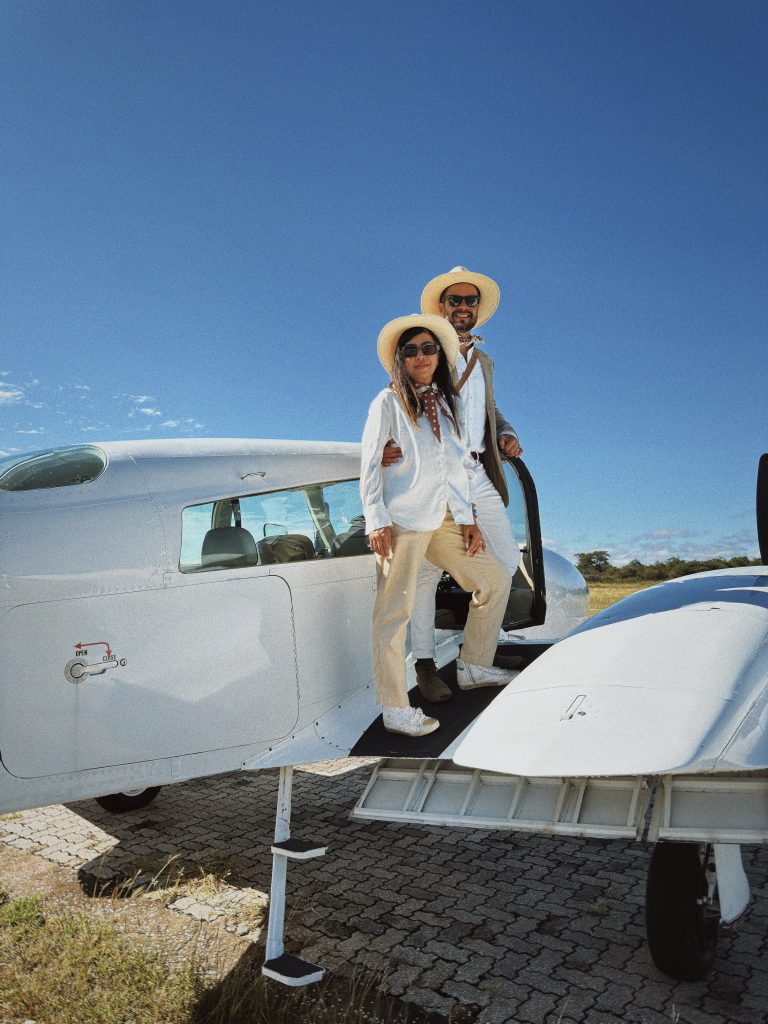
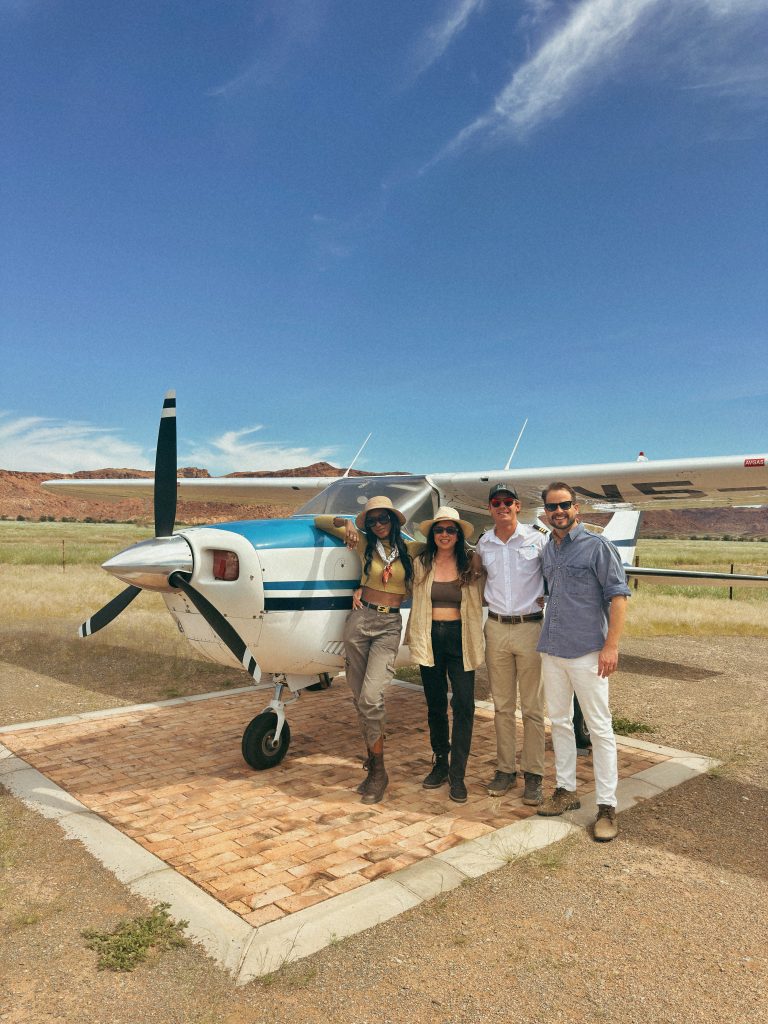
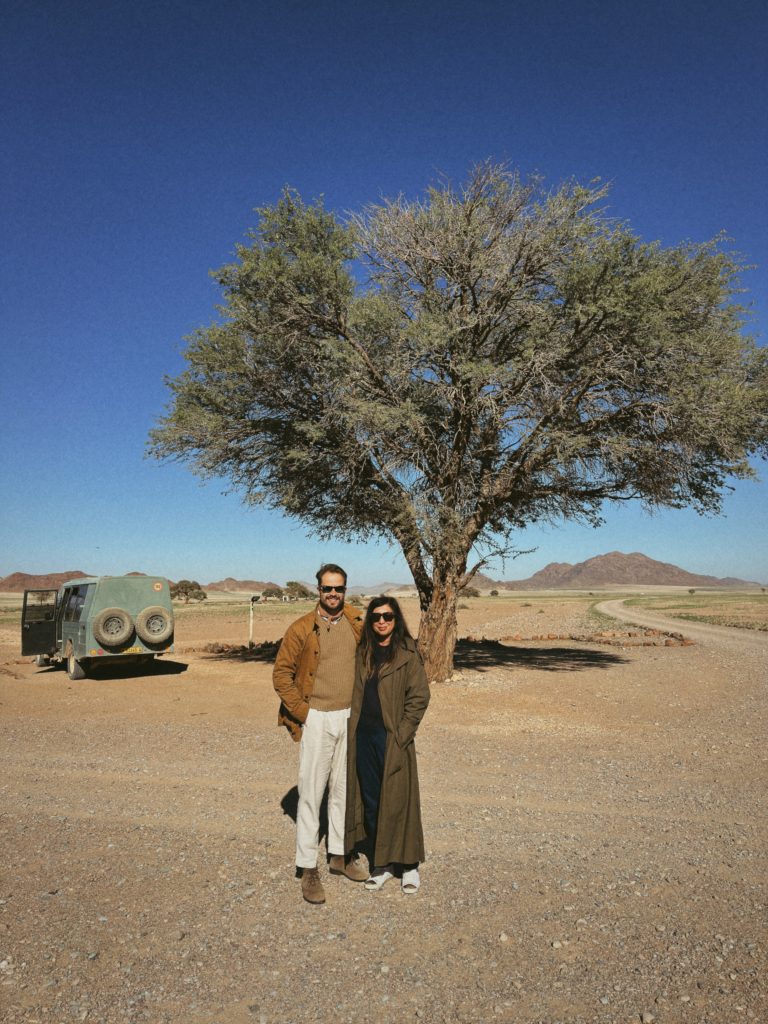
Our first charter flight out of Eros Airport was on a small Cessna, the kind where nothing is filtered. You feel the air, you see everything below you, and you understand quickly how vast Namibia actually is. For us, that was part of the draw. We’re aviation geeks, and flying through this landscape felt as much a part of the trip as the destinations themselves. On one leg, what would have been a seven hour drive by road turned into just under an hour in the air.
We moved between Cessnas and twin engine aircraft depending on the route, landing on remote airstrips that felt more like quiet clearings than airports. No infrastructure, no crowds. Just the plane, the landscape, and someone waiting to take you the rest of the way.
Sossusvlei: The Namib Desert Up Close
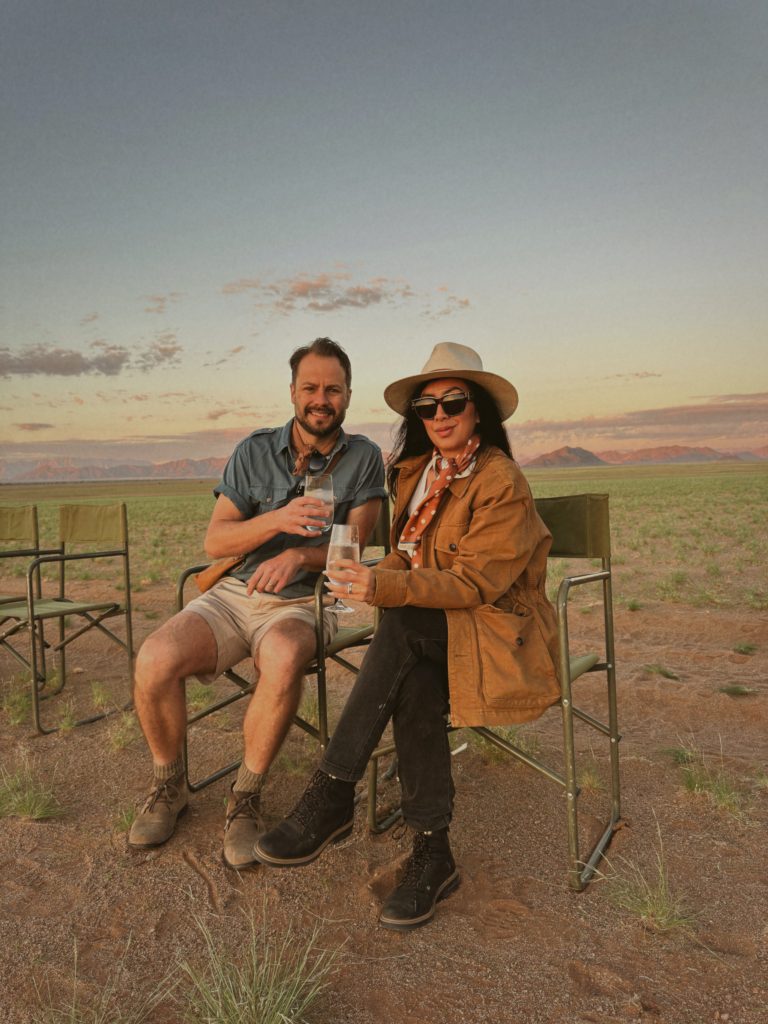
Our first stop was Sossusvlei, staying at Little Kulala. The lodge immediately set the tone. Thoughtful, understated, and completely in sync with the desert around it.
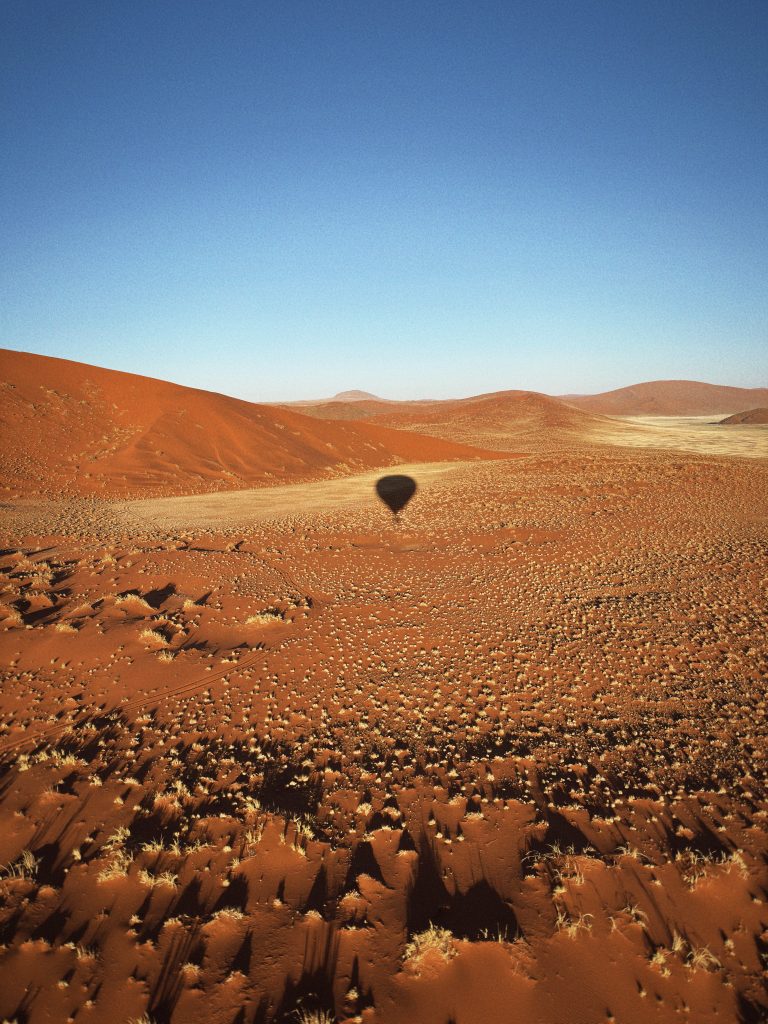
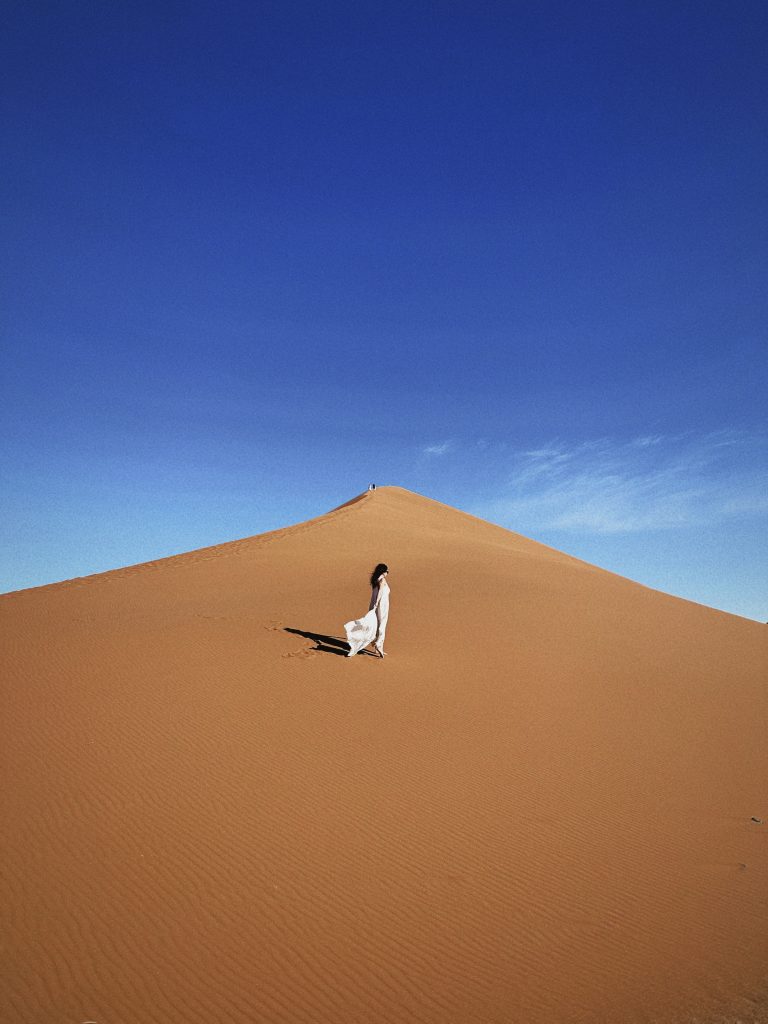
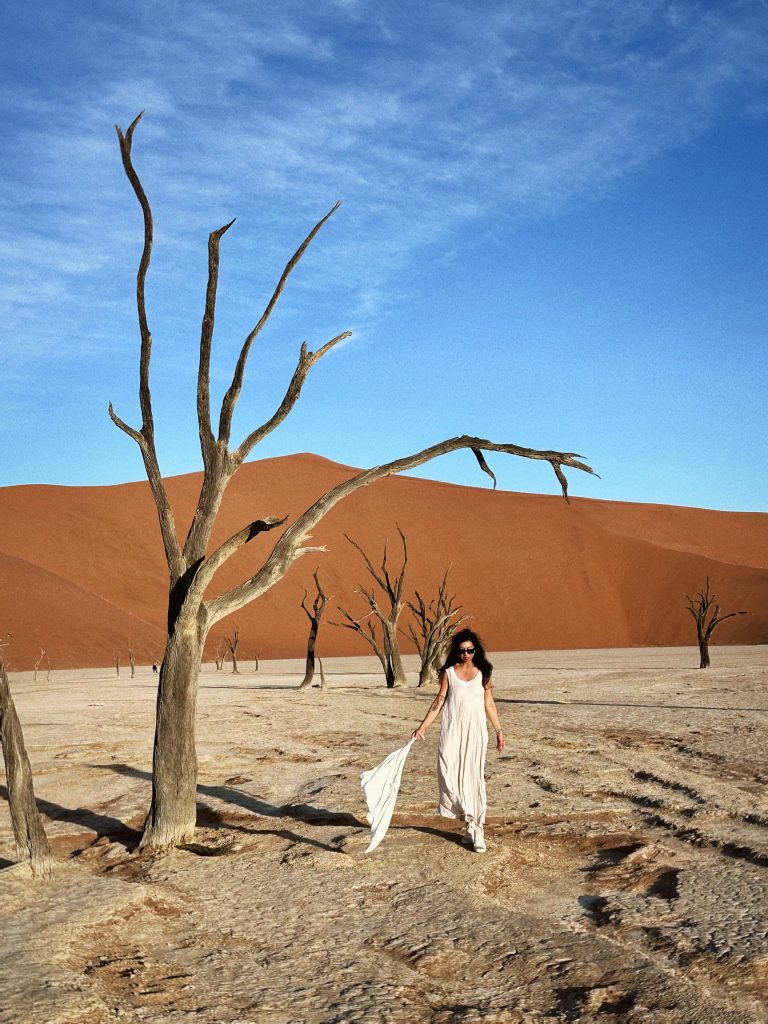
Sossusvlei is difficult to describe without sounding repetitive. You think you’ve seen it before, and then you’re standing there and realize you haven’t. The dunes are larger than expected, the colors shift constantly, and the silence is complete in a way that feels rare.
We walked into the Namib Desert early in the morning, when the air is still cool and the light is soft enough to define every ridge of sand. By midday, everything flattens under the heat. The rhythm of the day becomes very clear.
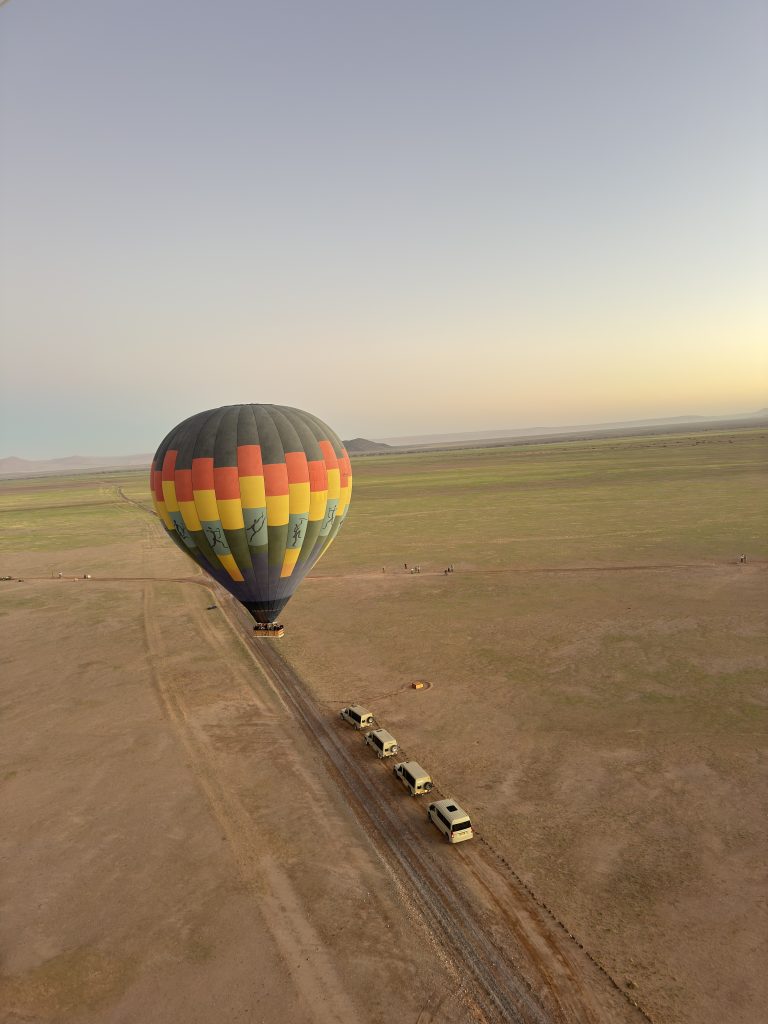
One morning, we took a hot air balloon over the desert. It’s one of those experiences that doesn’t need embellishment. Floating at sunrise, watching the dunes stretch in every direction, there’s a stillness that feels almost suspended. No sound except the burner, no movement except the slow drift of the balloon.
Damaraland: Slower, Wilder, Less Predictable
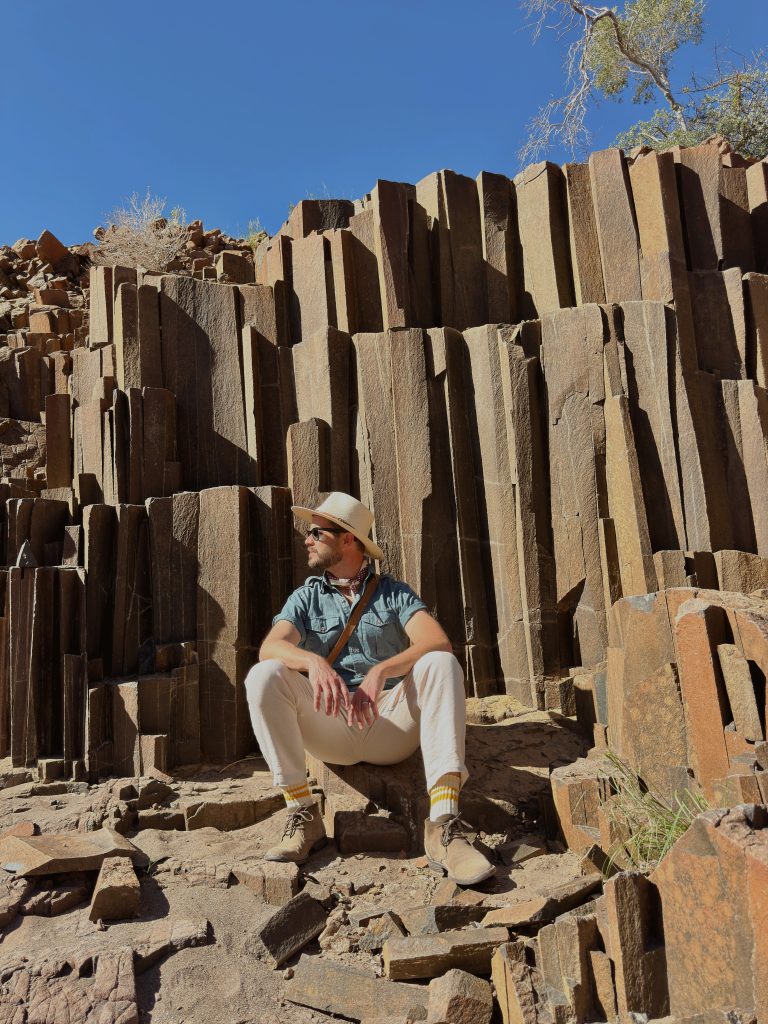
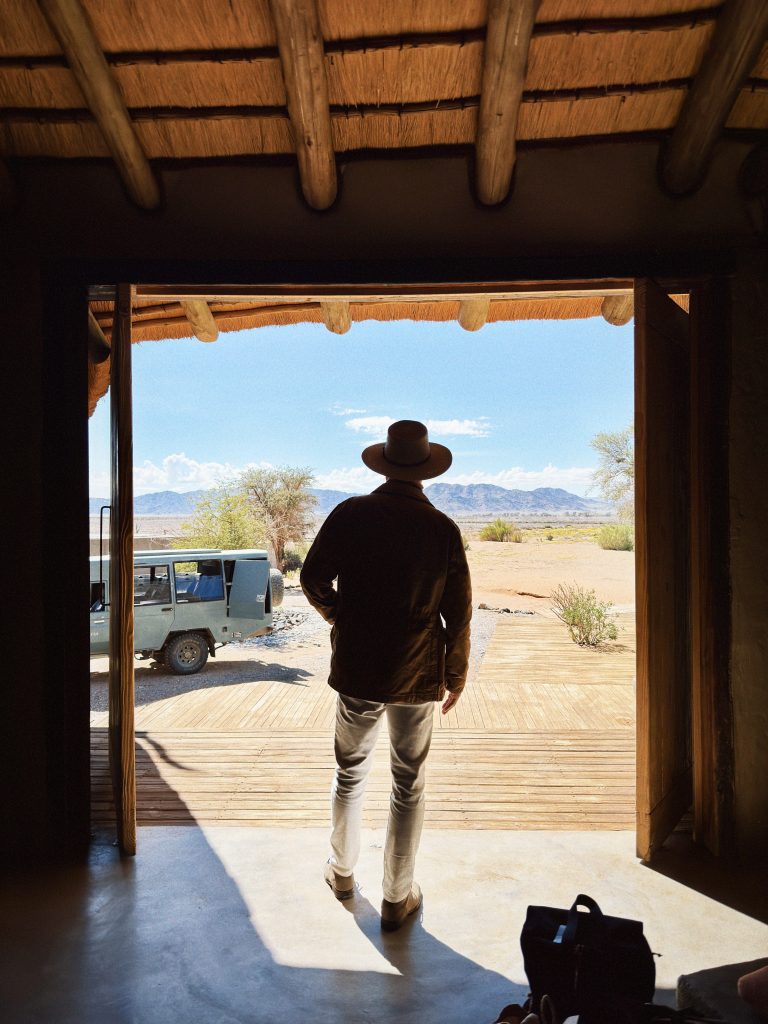
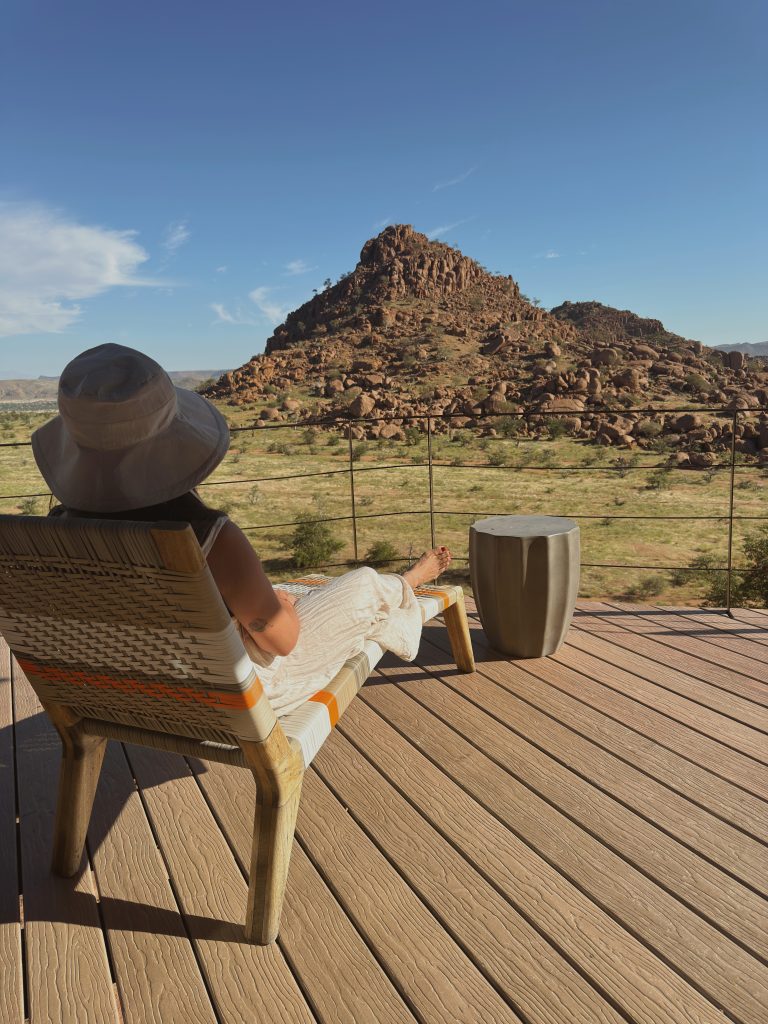
From there, we flew into Damaraland, landing on another remote strip and continuing on to Mowani Mountain Camp. The shift from desert dunes to rugged rock formations was immediate. The landscape felt older, more textured, less predictable.
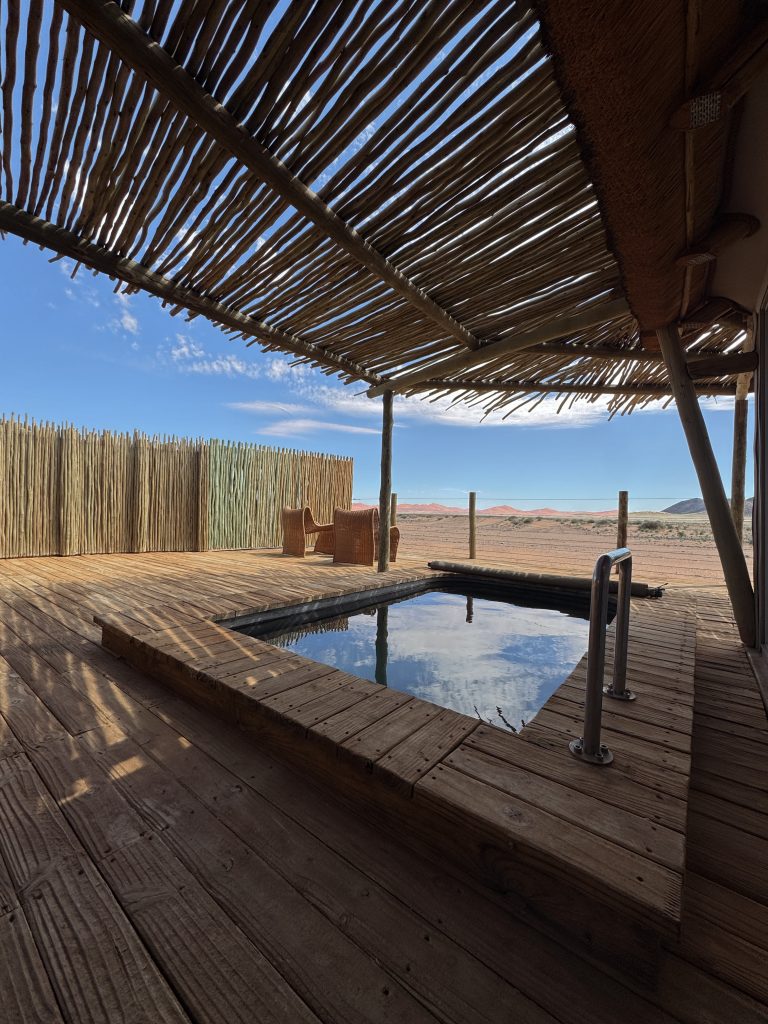
Mowani is built into the terrain in a way that makes it feel almost hidden. Rooms carved into rock, open views, and a quiet that settles in quickly. What stood out most, though, was the way we were hosted. It wasn’t overly structured or rehearsed. The team anticipated what we needed, remembered small details, and made everything feel natural rather than curated.
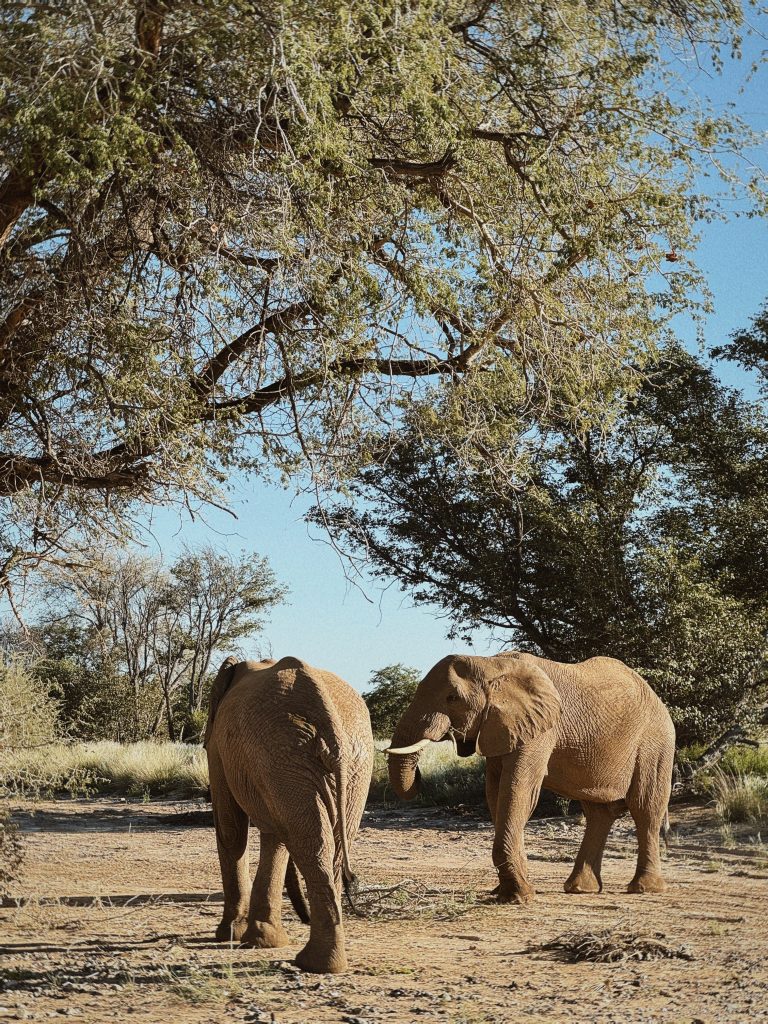
We spent time tracking desert adapted elephants, which requires patience. There are no guarantees. You move slowly, follow signs, and sometimes wait longer than expected. When you do find them, it feels less like a sighting and more like an encounter.
Etosha: Wildlife at Its Own Pace
Our final stop was Etosha National Park, staying at Onguma Camp Kala. This is where the trip aligns more closely with what people expect from safari. Game drives, early mornings, late afternoons, and time spent at waterholes watching wildlife come and go.
The landscape is open and stark, and instead of constantly moving, you spend time observing. Elephants, giraffes, and cheetahs appear at their own pace. Nothing feels rushed.
Onguma Camp Kala was the right place to end. Private, quiet, and designed in a way that encourages you to slow down completely. After moving through multiple regions, it felt like a place to sit with everything you had seen.
What to Pack
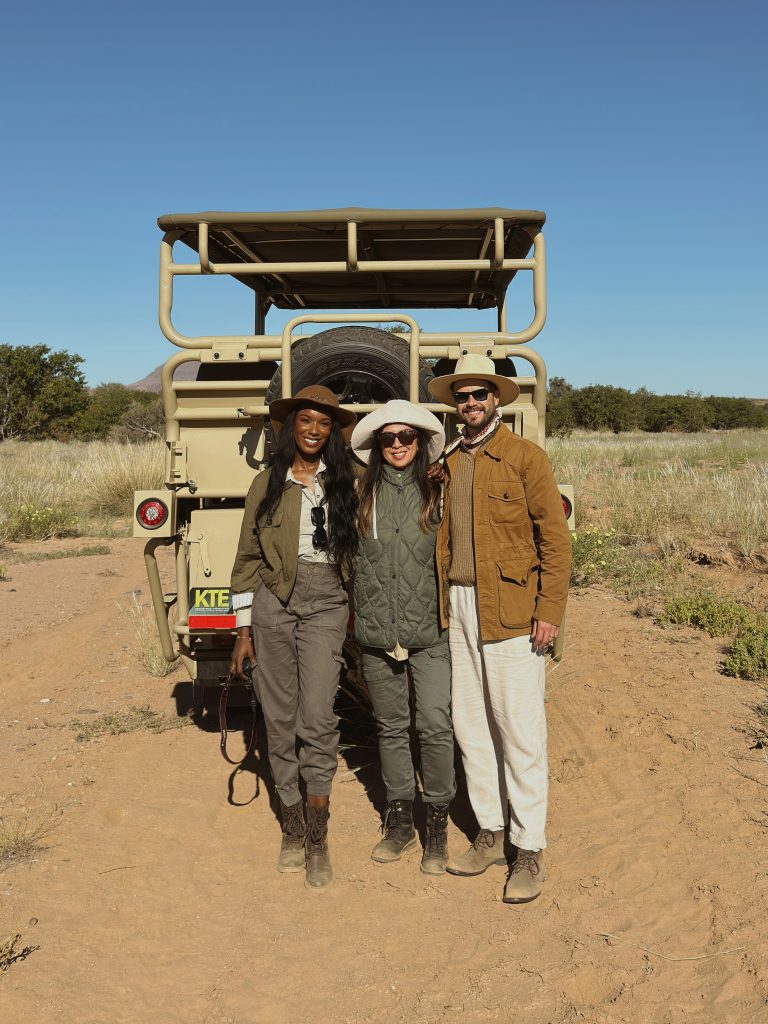
Every outfit you see in these photos was chosen specifically for this trip, from what to wear on the plane to dinner on the last night. Shop my safari wardrobe and similar looks on ShopMy.
Overall Thoughts on a Fly-In Safari
Looking back, flying was the decision that made this trip possible in the way we experienced it. It allowed us to move through different parts of the country without sacrificing depth. It gave us a view of Namibia that felt complete rather than fragmented. And from an aviation perspective, it was one of the most memorable parts of the trip. Flying low over the desert, landing in remote areas, and understanding the distances from above added a layer that driving alone wouldn’t have provided.
It’s not the typical way to do Namibia, and it’s not necessary if you have the time to travel by road. But if you don’t, it’s the difference between seeing one region well and experiencing the country as a whole.
Where We Stayed
If you’re considering Namibia, contact Nomoon Travel when you’re ready.